How to Calculate Cross-Stitch Fabric Size
Make sure the pattern will fit!
Contents
Introduction
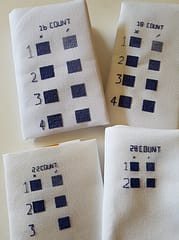
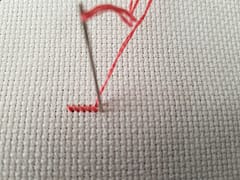
The chart is a grid. Fabric count is how many stitches fit in an inch (or 2.5 cm). Same pattern, 14-count vs 28-count, is a different object on the wall.
You do not need to memorise the arithmetic. Use the free fabric size calculator. This post is what the numbers mean, and what people get wrong.
Stitches vs inches
If you already know width and height in stitches, enter those. If you only know a finished size on a given count (the pattern envelope said “7 × 5 inches on 14-count”), enter inches plus that count. The table then shows the same design on 11, 14, 16, 18, 20 Aida, Hardanger, 25/28/32 evenweave, and a diamond-art centimetre row.
Stitched image size is the design only. Suggested fabric size is larger — margin for hoop, frame, or mounting. Do not buy cloth the size of the stitched area and hope.
Changing count later
Going up in count (14 → 18) shrinks the piece and usually needs less thread. Going down (14 → 11) grows it and drinks skeins. After you pick a count, run the skein estimator.
Thread-Bare PDFs include stitch width × height. Converted photos: set size on /convert before you buy if fabric is the constraint (a photo that is 400 stitches wide is a very different commitment on 11-count than on 18).
A worked example
A chart 336 × 252 stitches:
- 14-count: 24 × 18 inches stitched; plan on roughly 30 × 24 inches of fabric with margin
- 18-count: about 18¾ × 14 inches stitched
Those figures match the calculator’s default table. Yours will differ; that is the point of typing your own stitch counts.
Related tools
- Fabric size calculator
- Skein estimator
- Completion time estimator
- Convert a photo if you still need the chart